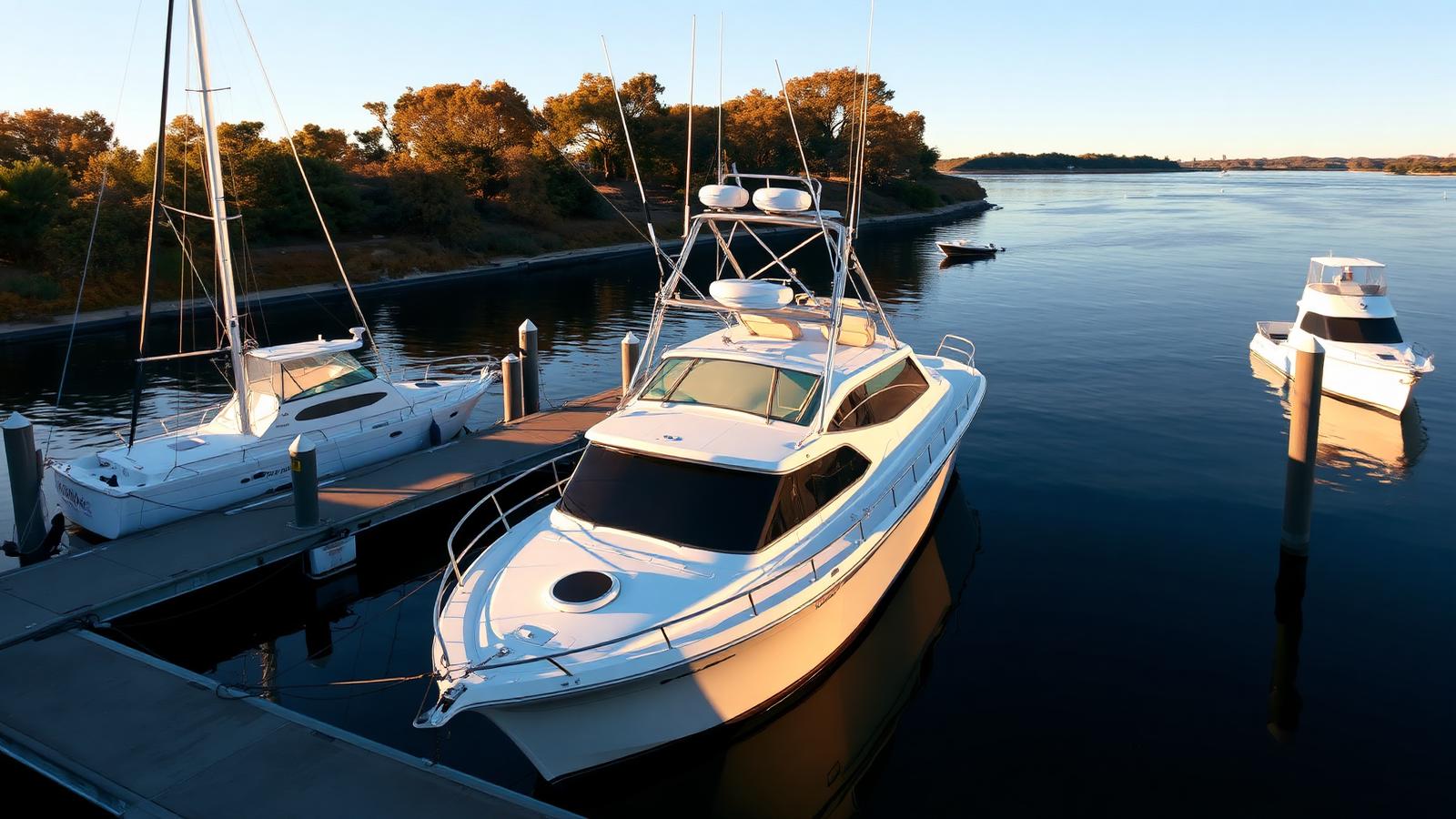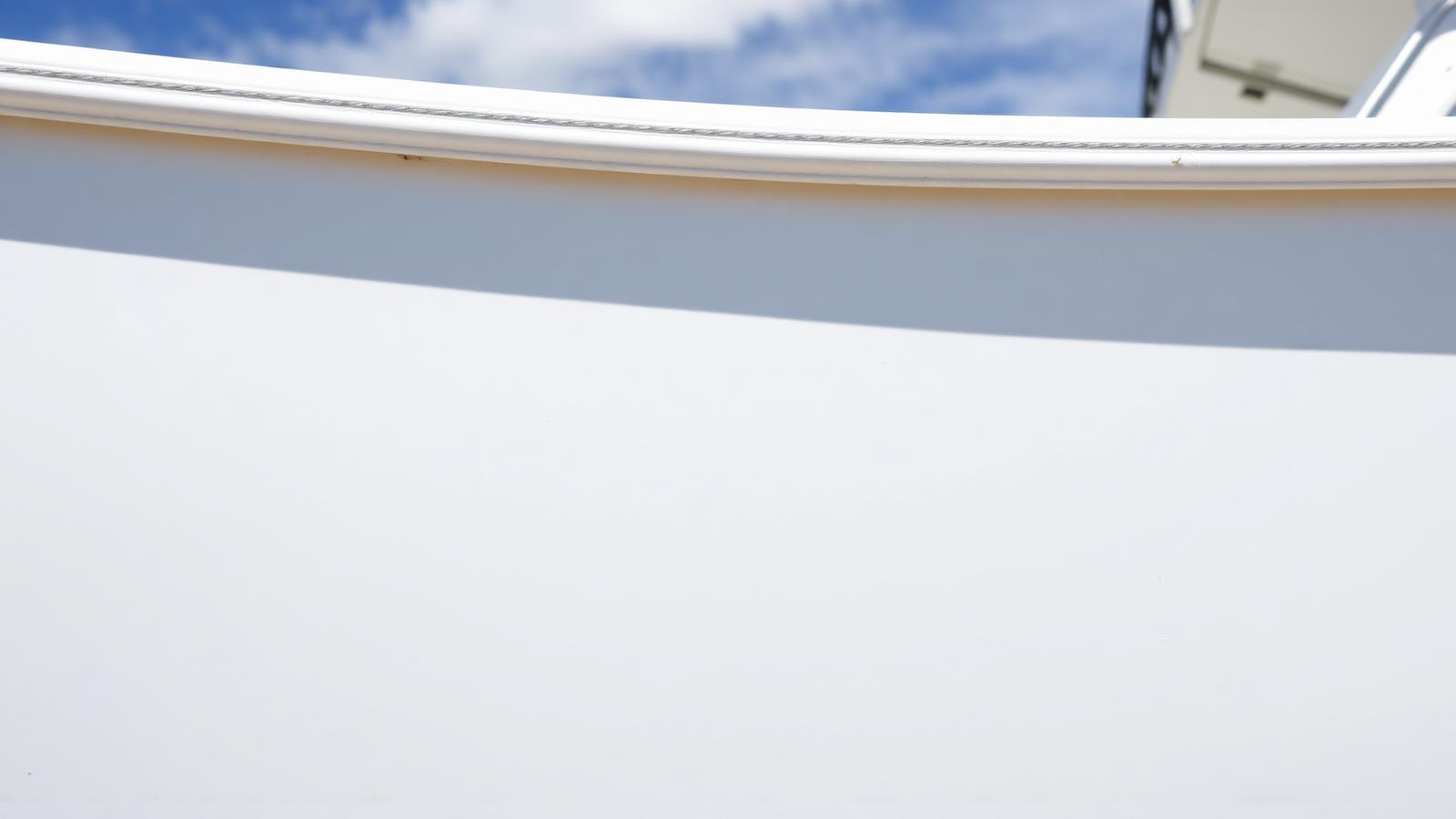
By the end of a Southern California summer, gelcoat has taken months of direct UV, salt spray, and heat cycling. The result usually is not dramatic — it is a slow flattening of gloss that owners stop noticing because they see the boat every week. Then a clean boat photographs badly, or a neighbour's hull looks noticeably deeper in colour, and it clicks.
Autumn is the natural moment to deal with it. The damage is fully expressed, the calendar has opened up, and the boat has months ahead where protection actually gets to do its job instead of being blasted daily.
What oxidation actually is
Gelcoat is a resin surface layer, not paint. UV breaks down its outermost microns, leaving a porous, light-scattering surface. That scattering is what you read as "dull" — and the powder that comes off on a cloth is that degraded layer releasing.
- Early oxidation: reduced depth of gloss, water no longer beading, colour looks flat in photos.
- Moderate: visible chalk on a cloth, dark colours look grey, staining is harder to remove.
- Advanced: obvious chalkiness, uneven patchy appearance, no reflection at all.
Why the timing works
- The damage is fully visible. Correcting in June means treating a surface that still has three more months of hard sun ahead of it.
- The boat is available. Restoration is not a two-hour job, and autumn is when a boat can be off the water for a day without wrecking anyone's plans.
- Conditions are more forgiving. Products applied out of blazing heat behave more predictably.
- Protection gets a fair start. A freshly corrected and protected surface entering a lower-exposure season holds up better than one that meets peak UV immediately.
- It prevents the winter slide. Boats that go into a quiet season already oxidised come out of it worse, not level.
What correction can realistically achieve
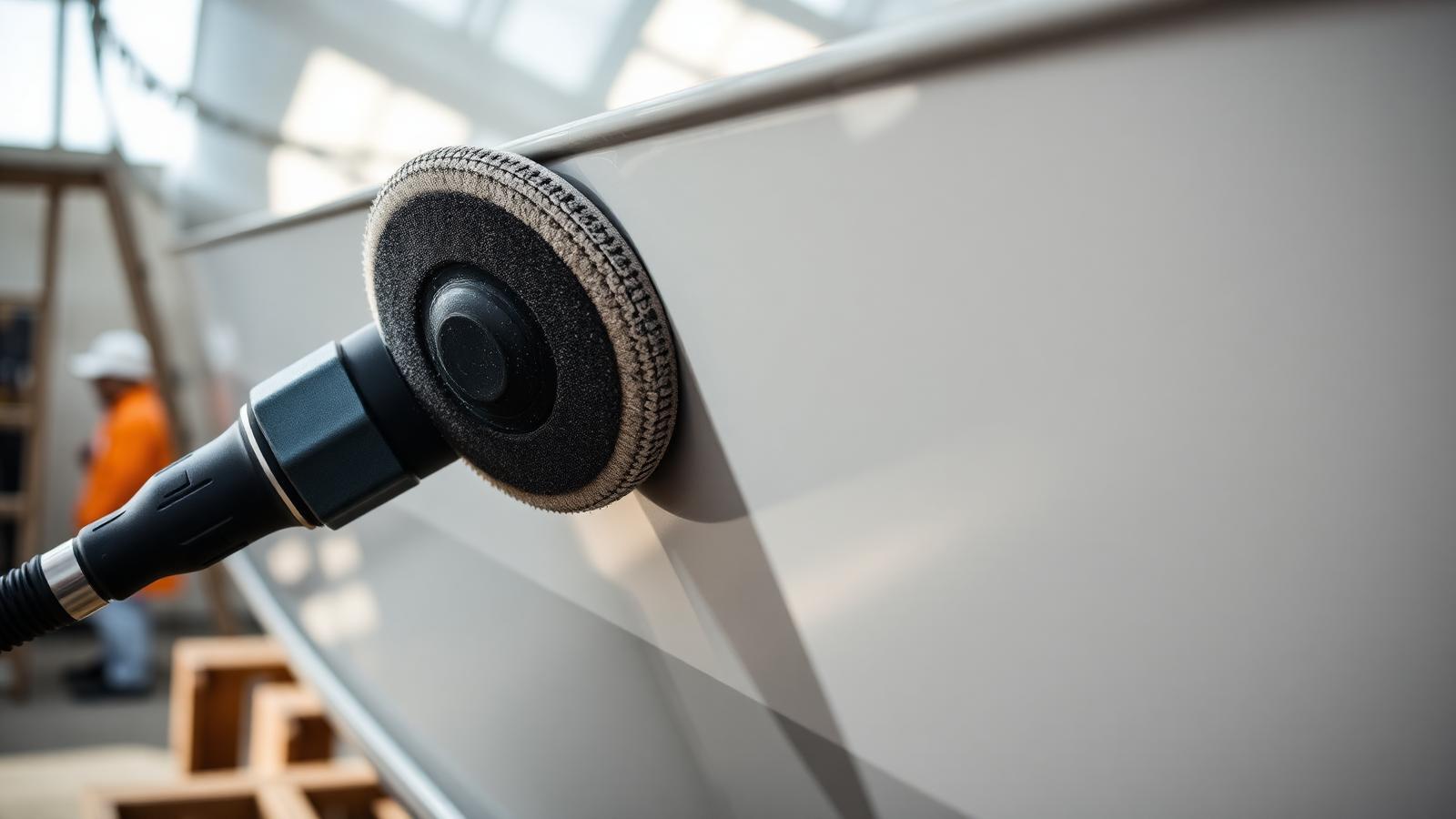
We would rather set expectations before the work than explain limits afterwards. Restoration removes a controlled amount of degraded surface and refines what remains. On most boats that means a genuine, obvious return of depth and colour.
- Chalkiness and surface haze: usually corrects well.
- Flat, tired colour on hull sides: usually improves substantially.
- Light oxidation staining and water spotting: usually removable.
- Fine surface marring: typically refines significantly.
What it cannot fix
- Deep scratches or gouges that go through the gelcoat — that is a repair, not a polish.
- Crazing and spider cracking in the gelcoat itself.
- Panels where gelcoat is already thin from age or prior heavy compounding.
- Chalking that has gone all the way through to the substrate colour, which sometimes calls for paint rather than correction.
- Fading on printed vinyl graphics, which do not respond to gelcoat correction.
Protection is the half that decides how long it lasts
Correction without protection is a short-lived result. A freshly corrected surface is clean and open, which makes it the ideal moment to apply protection — and the worst moment to skip it.
- Protection slows the next oxidation cycle; it does not stop UV entirely.
- Coverage, slip orientation, and how the boat is stored matter as much as the product used.
- Recurring maintenance is what keeps a restored finish looking restored.
- We do not quote fixed durability figures — exposure varies too much between boats to be honest about it.
Related service
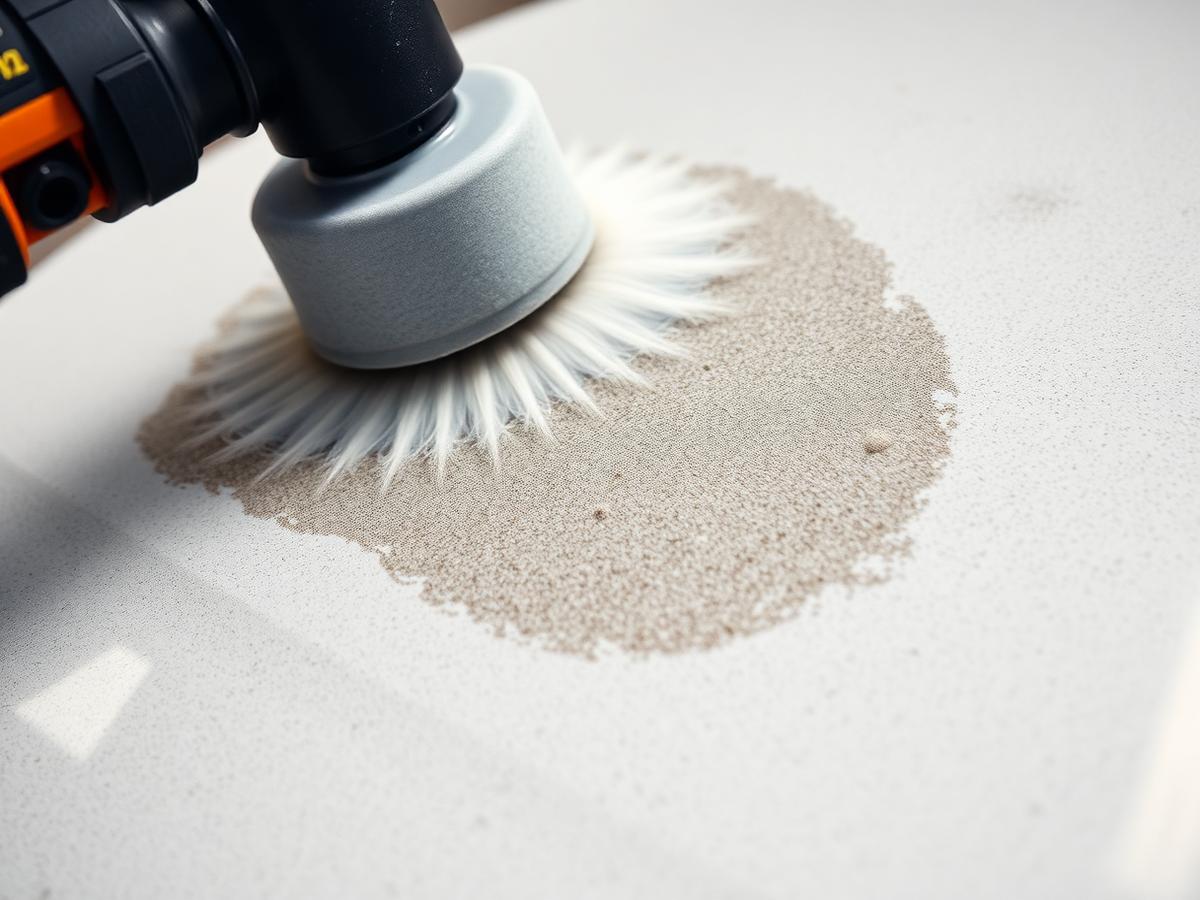
Restoration & Protection
Correction levels, protection options, and the pricing factors that drive them.
Explore this serviceWhat owners can do now
- Run the cloth test on the sunniest hull side and on a shaded panel, and compare.
- Photograph the worst panels in even light — this makes a much tighter estimate possible.
- Note whether water still beads after a rinse.
- Stop using aggressive household cleaners on gelcoat; they accelerate the problem.
- Decide whether the goal is maximum gloss or simply arresting the decline — the two lead to different scopes.
When to call a professional
- The cloth test shows chalk and washing no longer changes the appearance.
- The boat is being prepared for sale or photography.
- Dark hull colours have gone grey and flat.
- You are considering machine polishing yourself but are unsure how much gelcoat is left to work with.
Related location
Boat detailing in Long Beach
Restoration coverage and access context for Long Beach.
See the local guideRelated location
Boat detailing in Newport Beach
Local details for Newport Beach and the surrounding harbour.
See the local guideIf you are not certain whether your boat needs correction or just a thorough wash, our guide on telling the two apart covers the signs, and a few photos with an estimate request will get you a straight answer.
Common questions
Can all oxidation be corrected?
No. Gelcoat is a finite layer, and once it has been thinned by age or previous heavy compounding there is a limit to how much can safely be removed. We assess this on site, often with a small test area, before committing to a correction level.
Why is cooler weather better for restoration?
Products behave more predictably out of direct heat, panels do not flash-dry mid-process, and the work is not being squeezed between weekend outings. It is a planning advantage more than a chemistry one.
How long will restored gloss last?
That depends on the protection applied, the boat's exposure, and whether maintenance continues. We do not quote fixed lifespans, because a covered boat in a quiet slip and an uncovered boat in full sun are not comparable.
Is polishing the same as waxing?
No. Polishing corrects the surface by removing a very small amount of oxidised material. Wax or sealant protects the surface afterwards. Protection over an uncorrected surface just seals in a dull finish.
Where this fits in our work
Related services
Related locations
Last updated