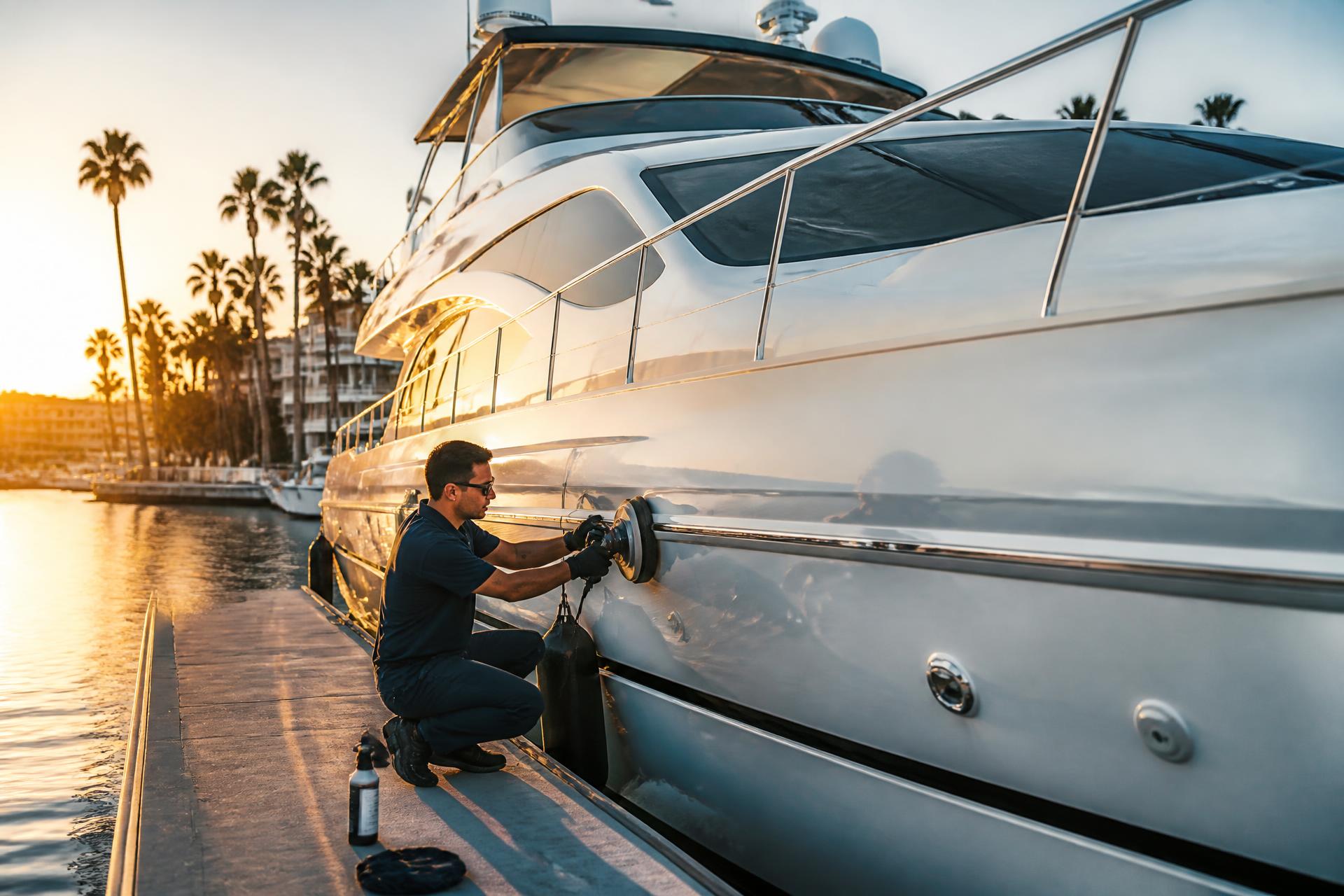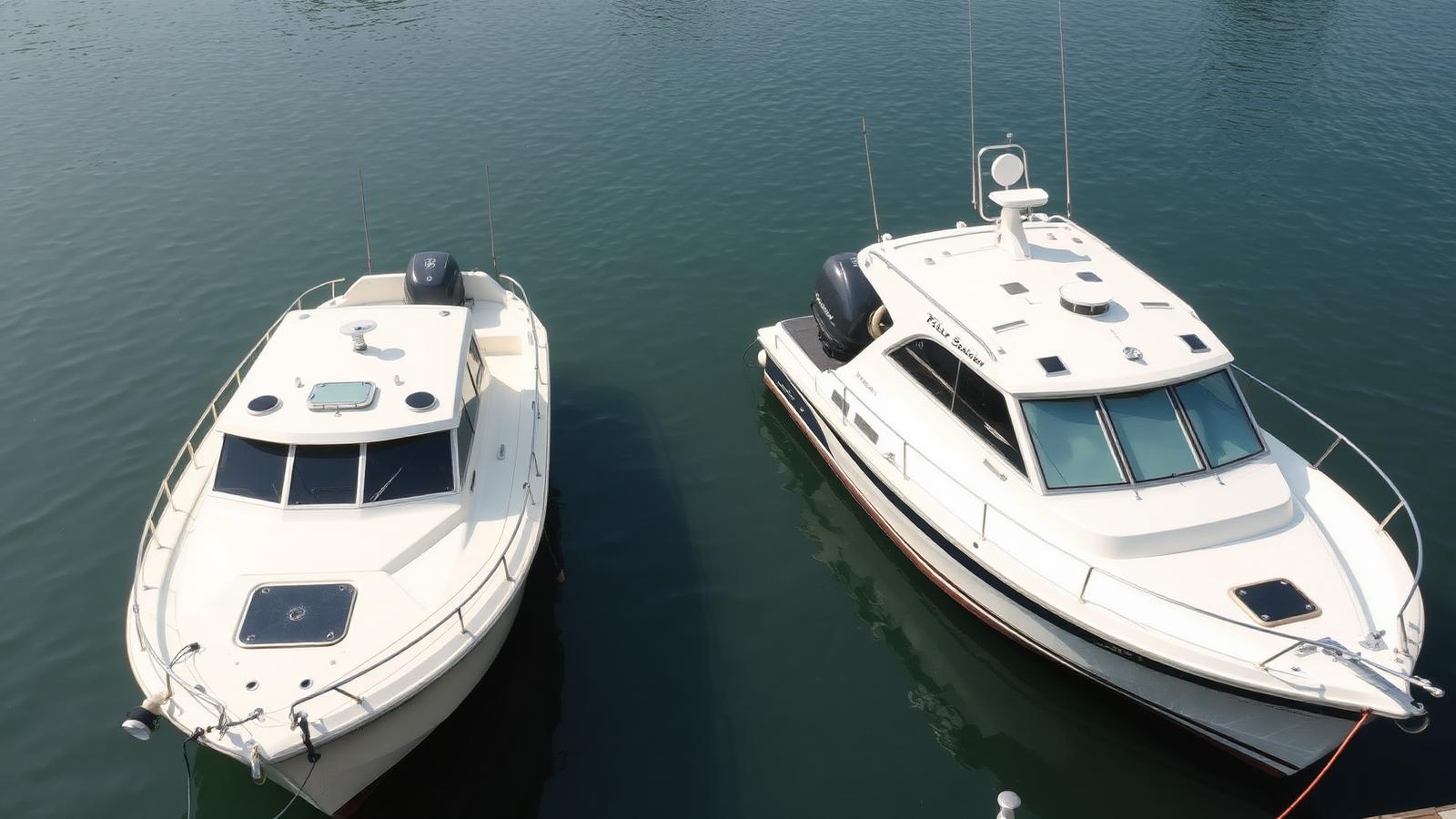
Two 32-foot boats in the same marina can have estimates that differ by a wide margin, and the owner receiving the higher number reasonably wants to know why. The short answer is that length tells you roughly how much surface area exists. It says nothing about the state of that surface, how long it takes to reach, or what will happen when you touch it.
What length actually tells us
Length is a useful starting variable and a poor finishing one. It correlates loosely with surface area, but layout matters more: a 30-foot centre console with an open deck and a 30-foot cruiser with a cabin, a head, and full upholstery are not comparable jobs.
- Freeboard height changes how much hull side there is and how it must be reached.
- Superstructure adds surface that length does not capture.
- Cabin boats add interior scope that open boats do not have.
- Beam matters — a wide 28-footer can have more deck than a narrow 32.
Condition is the biggest single factor
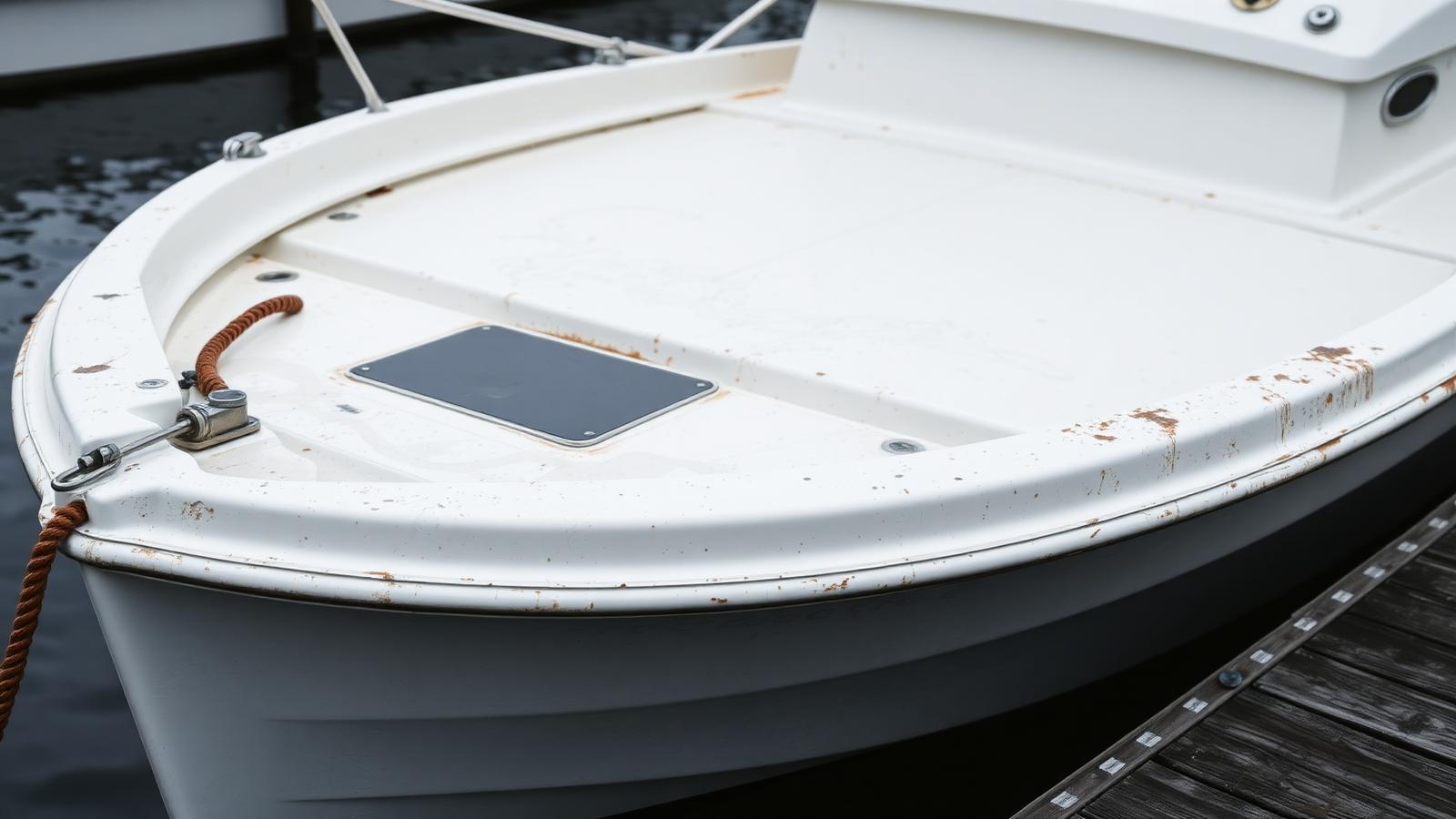
Two boats identical on paper diverge on condition. A boat washed monthly for three years needs contamination removed. A boat untouched for two years needs contamination removed and then the surface itself addressed.
- Recently maintained: cleaning removes what is there, and the surface responds immediately.
- Moderately neglected: multiple passes, targeted stain work, longer interior time.
- Heavily neglected: the wash is just the first stage of establishing what is underneath.
Oxidation changes the job entirely
Once gelcoat is oxidised, the work is no longer cleaning. Correction is measured in passes across every panel, with product, pad wear, and machine time throughout. It is the single largest cost step available on most boats.
- Light oxidation: a single-stage polish may be enough.
- Moderate: compounding followed by refinement.
- Severe: multiple stages, with realistic limits on the achievable result.
- Dark hulls typically demand more refinement to look right, because they show everything.
Interior scope varies more than anything else
Exterior work scales fairly predictably. Interiors do not. Two boats of identical length can differ by hours depending on how much soft goods, storage, and detail they contain.
- Upholstery volume and condition, especially seams and piping.
- Headliners, which are slow and delicate to clean well.
- Galley and head compartments, which take disproportionate time.
- Personal belongings and stored gear that must be worked around.
- Carpet, teak, and specialty surfaces that need their own approach.
Access: how easily we can actually work
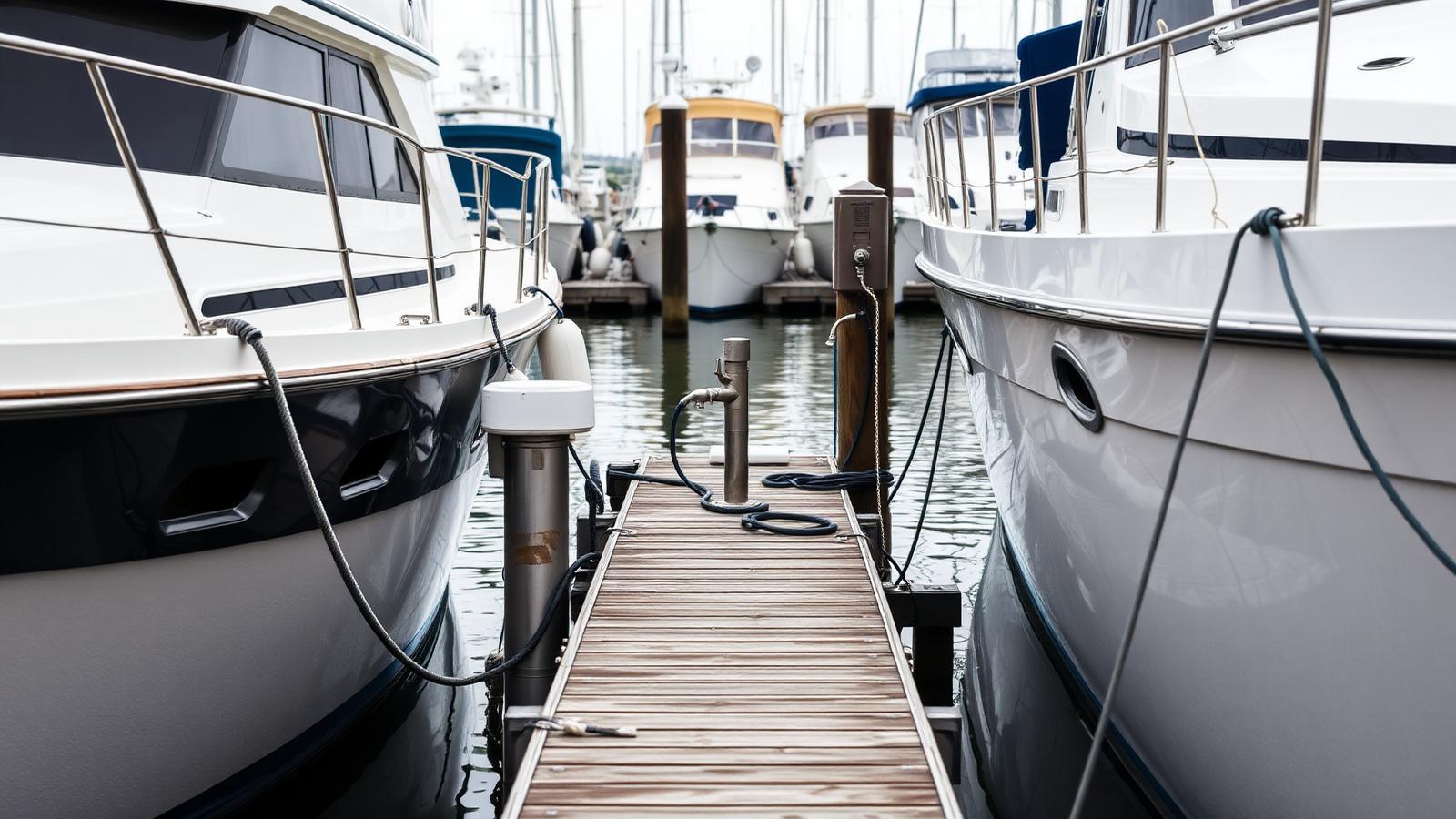
- A slip with a finger dock on both sides is faster than one accessible from a single side.
- A long carry from the parking area to the slip adds time on every trip back to the vehicle.
- Boats on a mooring or in an end-tie can require additional logistics.
- Trailered boats in a driveway are often the most efficient scenario of all.
- Boats packed tightly between neighbours limit working angles on the hull sides.
Water and electricity
Most slips and driveways have both, and when they do, this is a non-issue. Where they are unavailable or restricted, we bring what is needed — which changes the setup and the time involved.
- No dock water means bringing water, which limits volume and adds setup.
- No shore power affects machine work in particular.
- Some marinas restrict wash water discharge, which changes the method used.
- Telling us upfront prevents a revised estimate later — this is the single most useful thing to disclose.
Marina rules and scheduling
- Contractor registration, insurance filing, and gate access procedures take administrative time.
- Restricted working hours can split a job across visits.
- Some facilities restrict specific products or methods.
- Weekend and event restrictions affect when work can be scheduled at all.
Wash versus restoration is a category difference
Comparing a wash quote to a restoration quote is comparing two different services. A wash cleans. Restoration corrects the surface. If two estimates differ dramatically, the first thing to check is whether they describe the same scope at all.
| Factor | Small effect | Large effect |
|---|---|---|
| Length | Similar-layout boats within a few feet | A large step in size class |
| Condition | Well maintained, recently washed | Years without service |
| Oxidation | Gloss intact, water beads | Chalky, correction required |
| Interior | Open deck, minimal upholstery | Full cabin, galley, headliner |
| Access | Double finger dock, close parking | Single-side access, long carry |
| Utilities | Dock water and shore power | Neither available |
| Marina rules | Open access | Registration, restricted hours, method limits |
How photos change the estimate
Photos are the difference between a wide range and a useful one. They cost you five minutes and consistently produce the tightest estimate we can give without standing on the dock.
- One full side profile of the boat in even light.
- One close-up of a hull side, taken square-on so gloss is visible.
- One of the waterline.
- One of the deck and non-skid.
- One of the interior or cockpit, showing the actual state, gear included.
- Close-ups of anything specific that concerns you.
Why final scope sometimes needs an inspection
For washes, photos are usually enough. For restoration, we often confirm on site with a small test area, because how a specific gelcoat responds to correction cannot be judged from an image. That test protects you from paying for a result the surface cannot deliver.
Related service
Complete Wash
Scope and pricing factors for a full interior and exterior reset.
Explore this service
Related service
Maintenance Wash
The recurring option that keeps future estimates low.
Explore this serviceWhat owners can do now
- Take the six photos above before requesting any quote.
- Note your slip access, and whether dock water and shore power are available.
- Check whether your marina requires contractor registration.
- Run the dry-cloth test so you know whether oxidation is in play.
- Decide what outcome you actually want — clean, or restored — because they price differently.
When to call a professional
- Quotes you have received vary widely and you cannot tell why.
- You are unsure whether the boat needs a wash or correction.
- You are preparing the boat for sale and want to know what is worth spending.
- You would rather commit to a maintenance cadence than pay for periodic rescues.
Related location
Boat detailing in San Pedro
Access and local conditions for San Pedro and the LA Harbor area.
See the local guideRelated location
Boat detailing in Long Beach
Coverage details for Long Beach marinas.
See the local guideCommon questions
Why will nobody quote me a flat per-foot price?
Anyone can, and some do — but a per-foot number is either padded to cover the worst case or gets revised upward once the boat is seen. We would rather give an honest range based on the actual boat than a headline figure that changes on the day.
Do photos give a firm price?
They give a much tighter range. Photos reliably show condition, colour, and general layout. What they under-report is oxidation severity, texture depth, and interior detail, so final scope may still be confirmed on site.
Does a dirtier boat always cost more?
Usually, but the bigger driver is whether the soiling is removable by cleaning or has become part of the surface. A very dirty but sound boat can cost less than a lightly used but heavily oxidised one.
Do marina rules really affect price?
They can. Contractor registration, restricted hours, water-use restrictions, and long dock carries all add time, and time is what is being priced.
Where this fits in our work
Related services
Related locations
Last updated