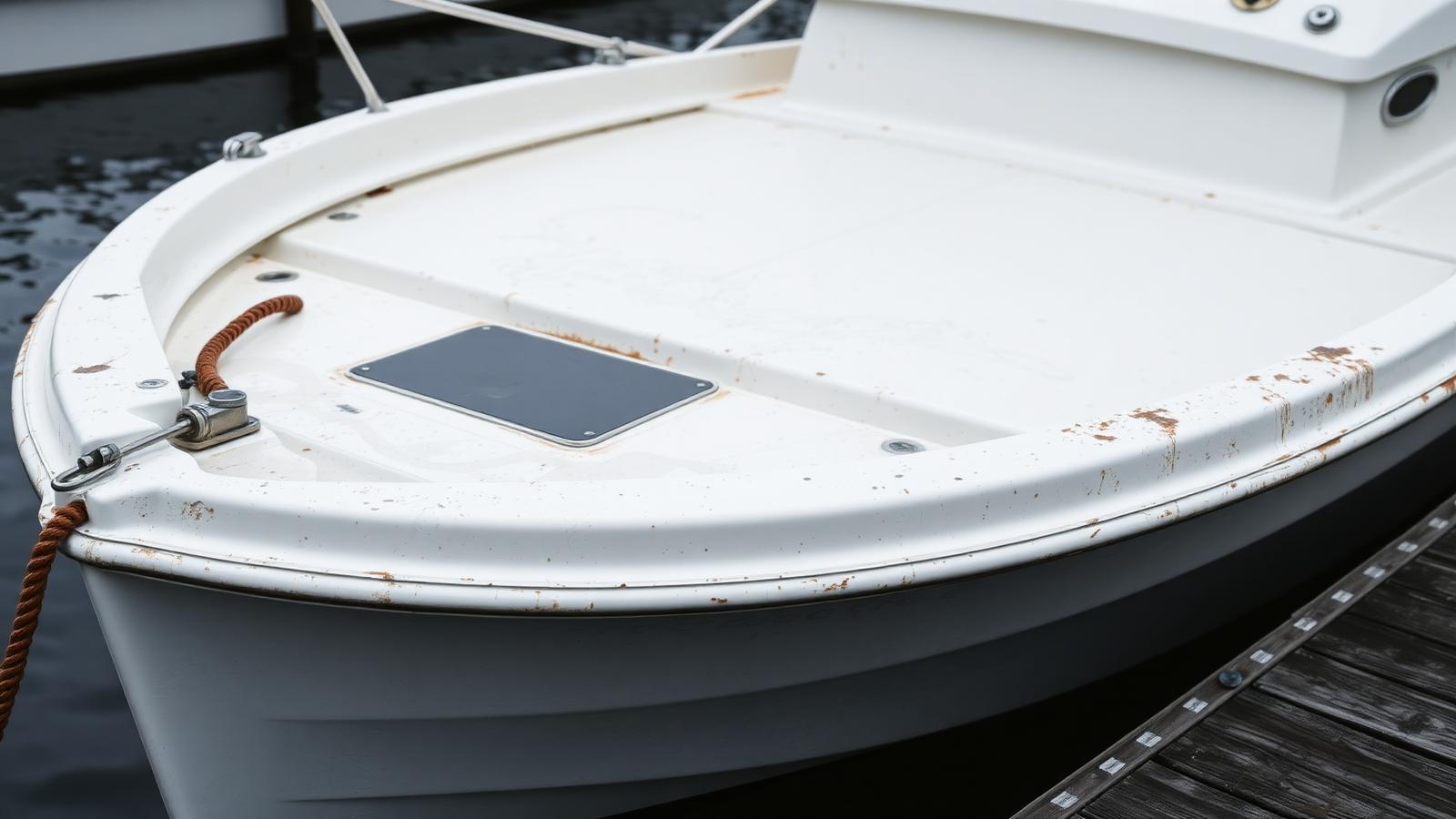
It is a genuinely frustrating outcome. You spent a Saturday washing the boat, you did it carefully, and from ten feet away it looks almost exactly as it did before you started. The instinct is to assume the wash was not thorough enough. Usually it was fine — the problem is that washing removes what sits on a surface, and what you are looking at is the surface itself.
Here are the seven causes behind almost every version of this, and how to tell which one you are dealing with.
1. Oxidation
The most common answer by a wide margin. UV degrades the top layer of gelcoat into a porous, light-scattering surface. Cleaning it does nothing to change how it reflects light — a clean oxidised hull looks exactly as flat as a dirty one, just without the dirt.
- Test: wipe a dry cloth across a dry hull side. White residue means oxidation.
- It shows first on sun-facing panels and on dark colours.
- Water no longer beading is a strong supporting sign.
- Fix: machine correction, then protection. Not a wash.
2. Embedded grime in textured surfaces
Non-skid, textured decks, and moulded patterns hold soiling below the level a wash mitt can reach. Rinsing runs over the top of the texture; the grey stays in the valleys.
- Test: the surface feels clean but reads grey rather than white.
- Fix: agitation with an appropriate brush and a cleaner formulated for the texture — sometimes a deeper decontamination step.
3. Mineral water spots
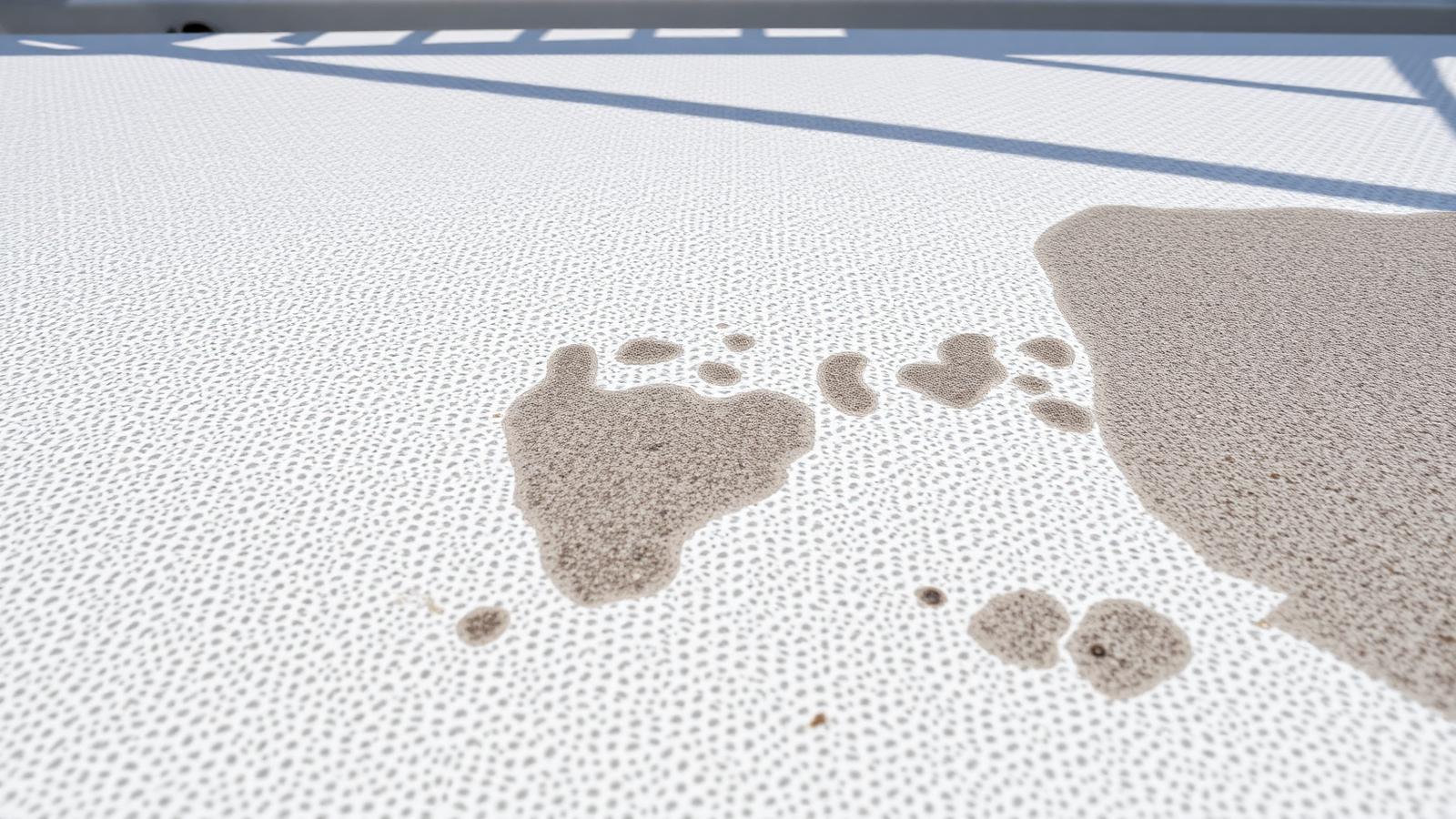
Rinsing with hard water and letting the boat air-dry leaves mineral deposits behind. Over a season those layer up into a haze, and in bad cases they etch into the gelcoat.
- Test: the boat looks worse right after drying than while wet.
- Light spotting wipes off with a detail spray; heavy spotting does not.
- Fix: light cases clean off, etched cases need polishing.
- Prevention: dry the boat rather than letting it air-dry.
4. Stained non-skid
Distinct from general embedded grime. Non-skid takes specific insults — fuel, fish, sunscreen, rust drips, black shoe scuffs — that soak into the texture rather than sitting on it.
- Test: discolouration is patterned or localised rather than uniform.
- Fix: targeted stain treatment; some staining improves substantially but does not fully disappear.
5. Old protection that has failed
Wax and sealants degrade. As they break down they can go patchy and cloudy, so the boat looks blotchy after washing — glossy in some areas, flat in others.
- Test: uneven gloss in patches rather than a uniform dullness.
- Fix: remove the failed layer, correct if needed, then reprotect. Adding fresh wax on top of failed wax does not solve it.
6. Mildew
Especially on vinyl, canvas, seams, and shaded interior surfaces. Mildew is biological, and it grows back into the material rather than sitting on top of it.
- Test: dark spotting concentrated at seams and in shaded, poorly ventilated spots.
- Fix: appropriate treatment plus fixing the ventilation problem that caused it. Cleaning without addressing airflow means it returns.
7. Worn vinyl and upholstery
Sometimes the seats do not look dirty — they look old, because they are. UV hardens vinyl, colour fades unevenly, and the surface texture changes. Cleaning a worn seat produces a clean worn seat.
- Test: colour looks flat and the material feels stiff rather than supple.
- Fix: cleaning and conditioning improve appearance and slow further degradation; they do not reverse UV damage.
Washing versus restoration, plainly
Washing removes contamination that is sitting on a surface. Restoration changes the surface itself — removing a controlled amount of degraded material so light reflects properly again. They are different processes with different tools, times, and prices, and one is not a cheaper version of the other.
| Symptom | What it usually is | What actually resolves it |
|---|---|---|
| Clean but flat and dull | Oxidation | Machine correction, then protection |
| Grey texture that will not brighten | Embedded soiling | Agitation and decontamination |
| Spots that appear as it dries | Mineral deposits | Dry after rinsing; polish if etched |
| Patchy shine | Failed protection | Strip, correct, reprotect |
| Dark spotting at seams | Mildew | Treatment plus ventilation |
| Stiff, faded seats | UV-worn vinyl | Clean and condition; replace if failed |
Related service
Complete Wash
When the boat is genuinely dirty but the surface underneath is sound.
Explore this service
Related service
Restoration & Protection
When cleaning no longer changes how the boat looks.
Explore this serviceWhat owners can do now
- Run the dry-cloth test before buying any more products.
- Check whether water still beads after a rinse.
- Dry the boat after washing instead of letting it air-dry.
- Photograph a sun-facing hull side, the non-skid, and a seat in even light.
- Stop adding wax over a surface that is already dull — it will not fix it.
When to call a professional
- The cloth test comes back chalky.
- Two thorough washes in a row produced the same disappointing result.
- Staining is localised and stubborn rather than general.
- You want to know honestly what the boat can look like before spending anything.
If you would like a straight read on which of these seven you are dealing with, send photos with an estimate request. It costs nothing to be told a wash is all you need.
Common questions
Am I using the wrong soap?
Occasionally, but rarely. Household detergents strip protection and can dull surfaces over time, so a marine wash is worth using. But if the boat looks tired immediately after a careful wash, the cause is almost always the condition of the surface, not the product.
Will more scrubbing fix it?
No, and it can make things worse. Aggressive scrubbing on an oxidised or dusty surface adds fine marring. Once cleaning has removed what is on top, more effort is spent against the surface itself.
Does waxing fix a dull boat?
Wax over an oxidised surface can briefly darken it and improve the look, but it seals in the dullness. Correction first, then protection, is the order that actually works.
How do I tell which problem I have?
The dry-cloth test separates most cases: chalk on the cloth means oxidation. Staining that stays put in texture is embedded soiling. Spots that stay after drying are mineral deposits. Photos let us tell you specifically.
Where this fits in our work
Related services
Related locations
Last updated