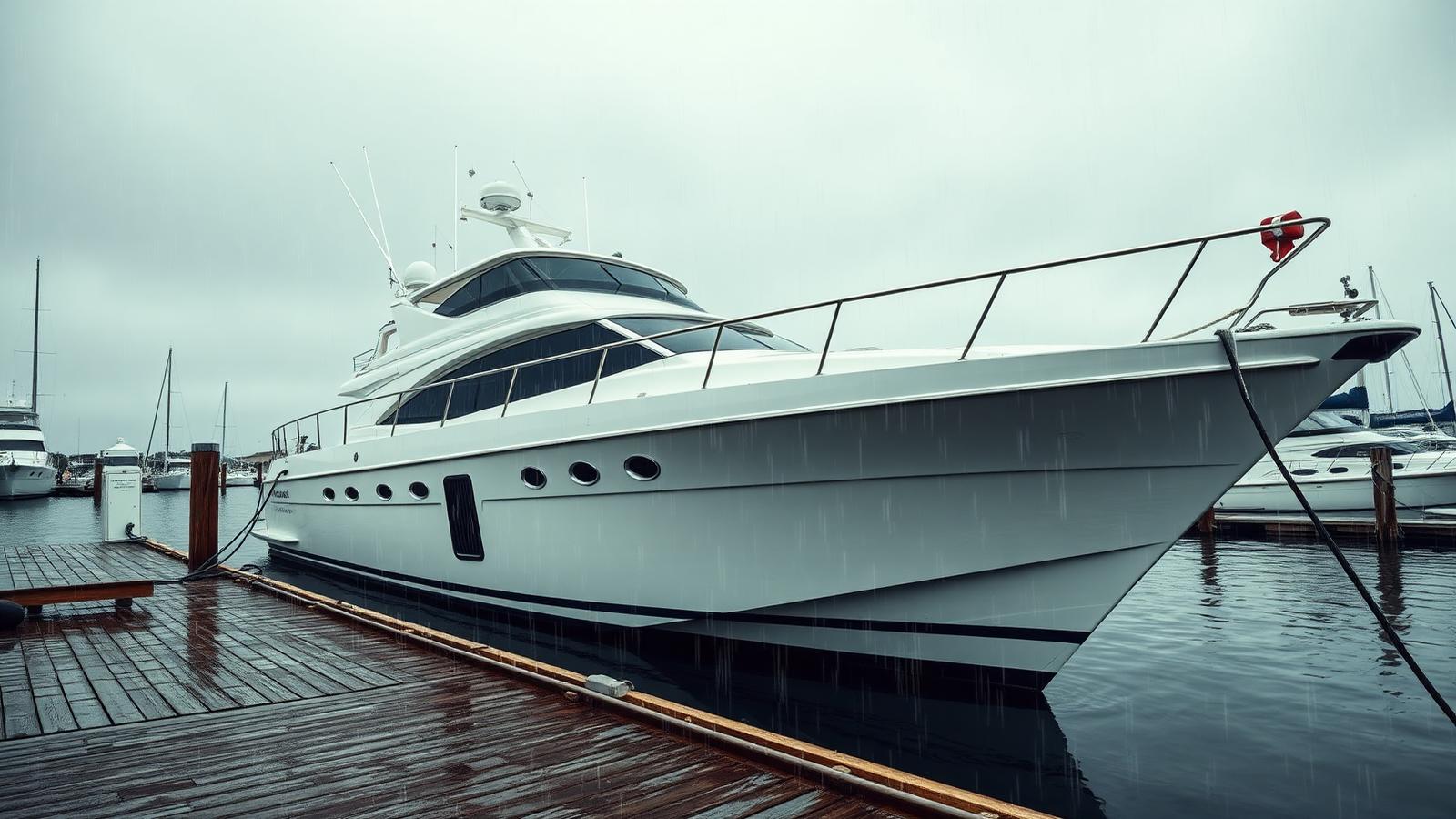
Autumn is a quieter season on the water here, not a closed one. Boats stay in their slips at Newport Beach, Long Beach, and Channel Islands Harbor, and use simply tapers off.
That combination — still in the water, less frequently visited, more rain — is exactly what causes the condition owners discover in March.
In this guide
- Why the autumn reset matters more than a spring one
- Salt removal and hardware
- Oxidation and protection before the low-use months
- Interiors, upholstery, and moisture
- Covers, ventilation, and storage
- A before-winter checklist, mistakes, and when to call a professional
Why the autumn reset matters
A spring wash cleans up damage that has already happened. An autumn wash prevents it. Everything left on the boat in October — salt, dust, organic debris, bird mess — sits there through the wettest and least-attended part of the year.
Moisture is the multiplier. Salt that would be harmless on a dry boat becomes persistently corrosive when it is repeatedly dampened by rain and marine layer.
Salt removal comes first
Salt does not sit only on the hull. It concentrates where water pools and evaporates: rail bases, cleats, hinges, latches, fasteners, canvas fittings, and the underside of hardware.
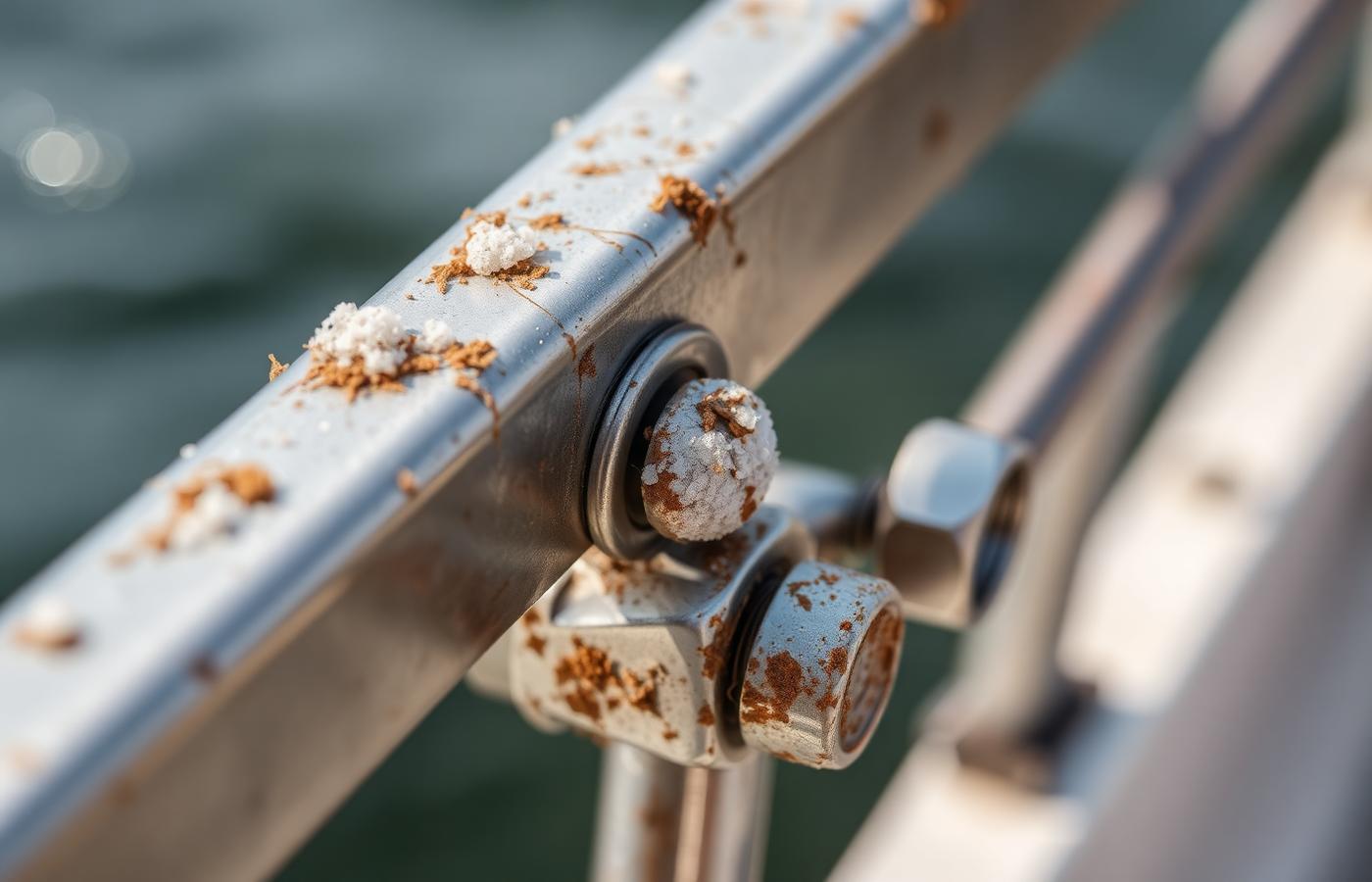
- Rinse thoroughly with fresh water, including the underside of hardware and rail bases.
- Wash rather than rinse — salt bonded to surfaces needs soap and contact.
- Work through hinges, latches, and fastener heads deliberately.
- Flush canvas and cover fittings, which hold salt in their seams.
- Dry stainless afterwards rather than leaving it wet.
Related service
Complete Wash
A full interior and exterior reset before the low-use season.
Explore this serviceOxidation and protection
By autumn, gelcoat has taken a full summer of UV. Dark hull sides and unshaded topsides are usually where fade shows first.
There is a simple test from the dock. Run a finger across a dry, clean hull side. If it comes back chalky, the surface is already oxidised, and a wash will not bring gloss back — that needs correction.
| What you find | What it means | Autumn action |
|---|---|---|
| Clean, glossy surface | Protection is intact | Wash and reapply protection |
| Slight dullness, no chalk | Protection is failing | Wash, light polish, protect |
| Chalky residue on the finger | Active oxidation | Correction before winter |
| Patchy fade on dark panels | UV exposure damage | Assess correction level on-site |
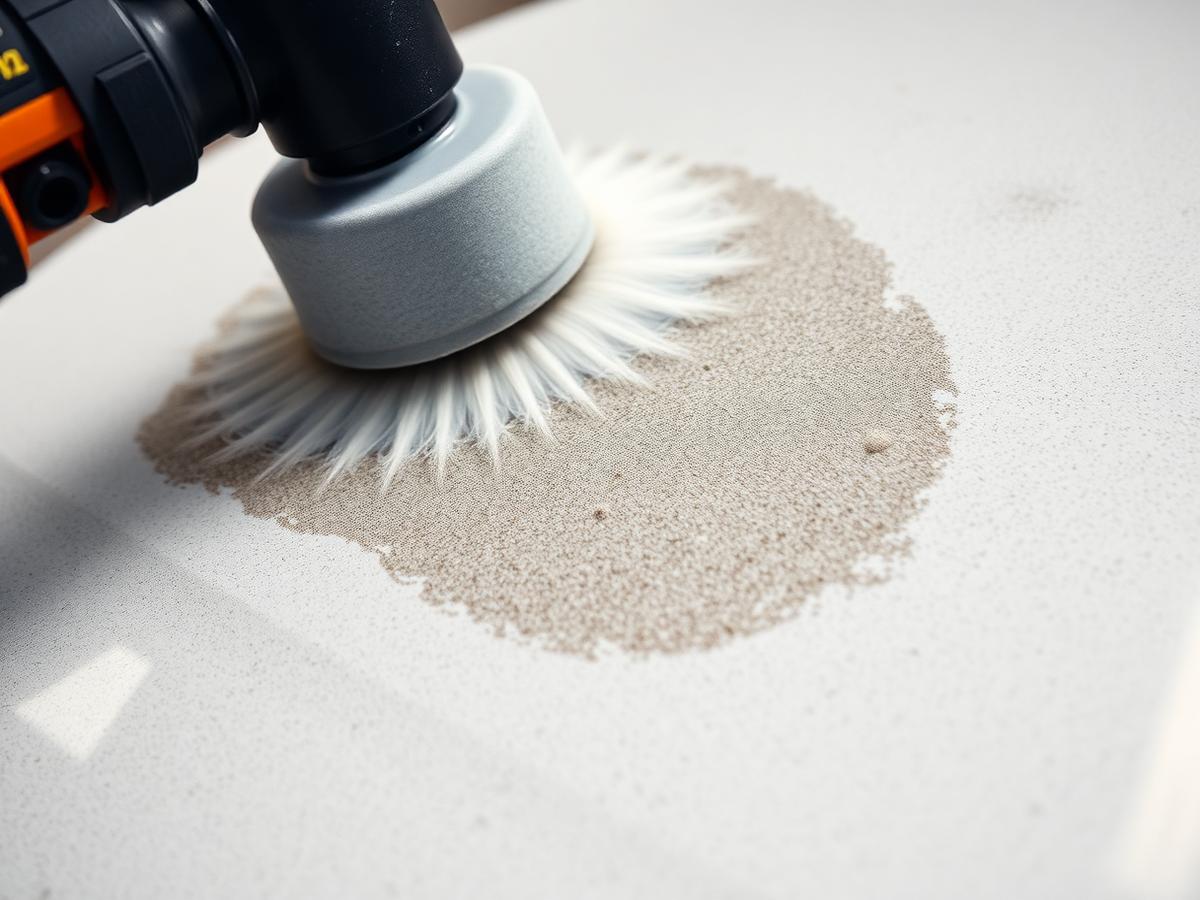
Correcting in autumn has a practical advantage: the surface is protected through the months it is least looked after, and spring becomes a wash rather than a project.
Related service
Restoration & Protection
Correction and protection ahead of the low-use season.
Explore this serviceInteriors, upholstery, and moisture
Mildew is the defining winter problem for slipped boats in Southern California. It does not need a leak — an unventilated cabin with damp soft goods is enough.
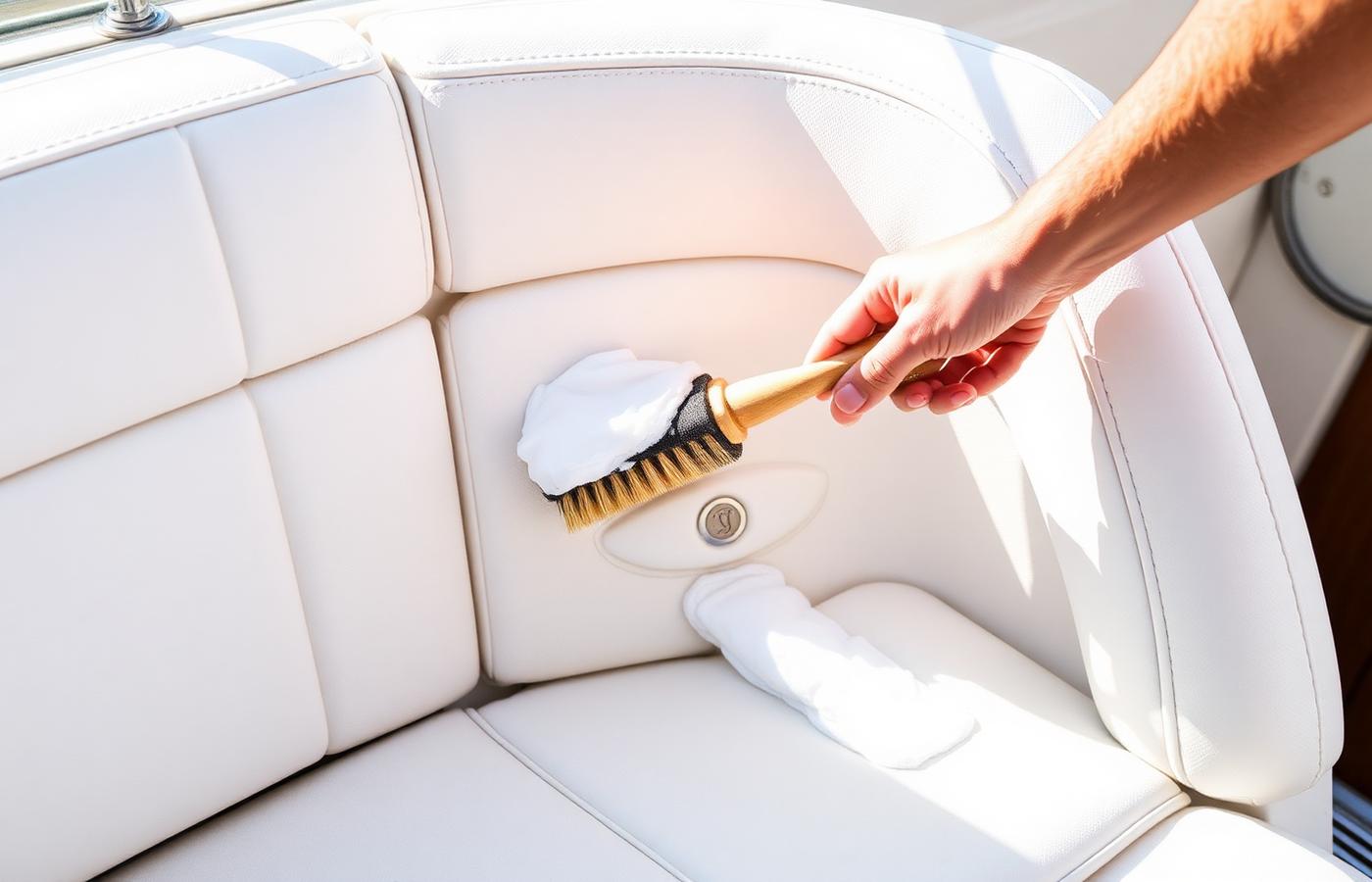
- Clean vinyl and upholstery properly and let everything dry fully before closing up.
- Remove anything that holds moisture: towels, bedding, life jackets, cushions where practical.
- Empty and dry the refrigerator, lockers, and bilge areas you can reach.
- Check that limber holes and drains are clear.
- Leave a path for air — vents open, lockers cracked, hatch boards fitted but not sealed.
Covers and storage
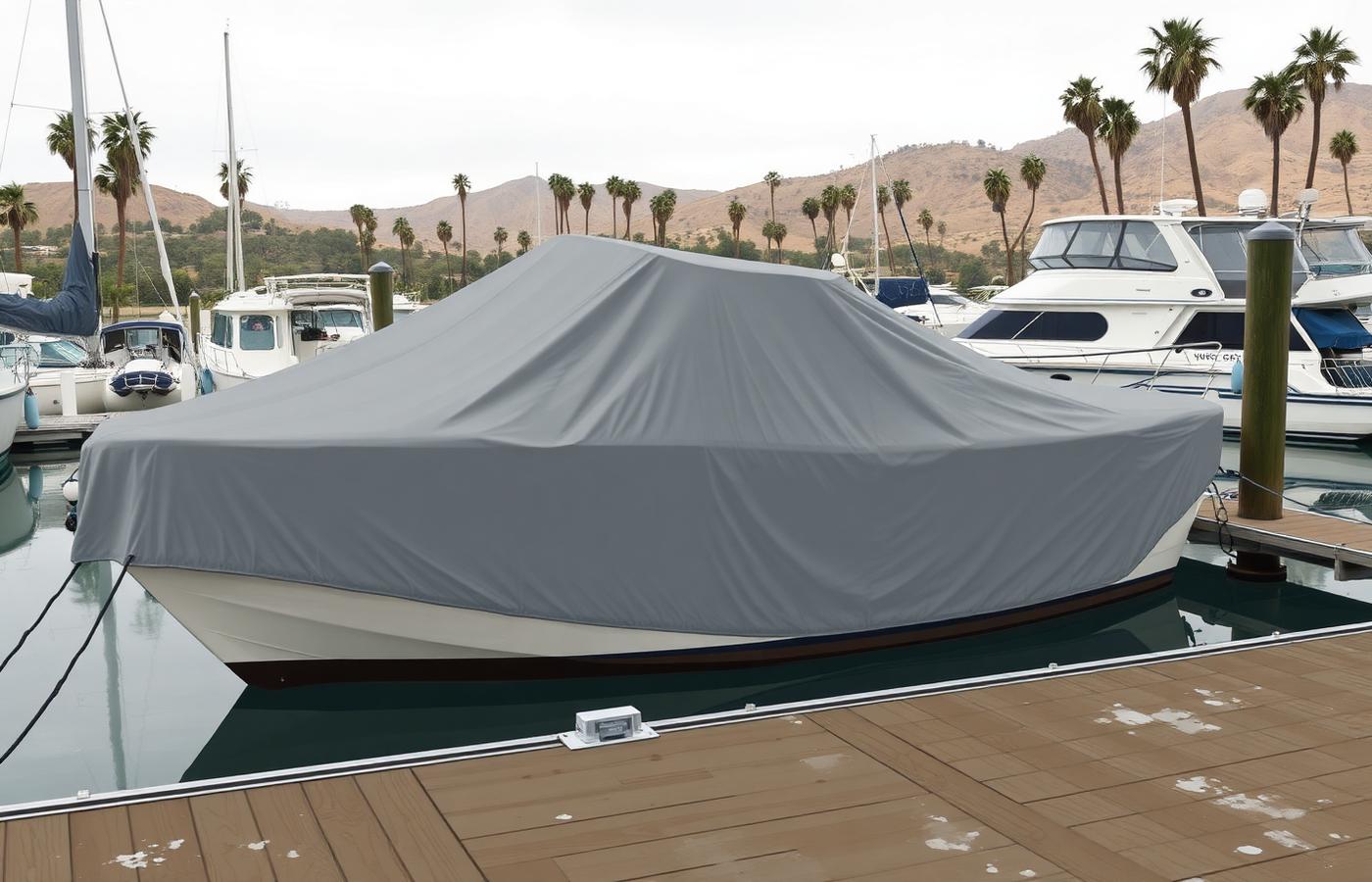
- Fit matters more than material — loose covers abrade the surface in wind.
- Ventilation matters more than water resistance for boats staying in the water.
- Clean the boat before covering it; a cover over dust holds grit against gelcoat.
- Check fastenings after the first storm and after any wind event.
- Inspect the cover itself for pooling points that will hold standing water.
Before-winter owner checklist
Common mistakes
- Treating autumn as the end of boat care rather than the start of the season that needs it most.
- Rinsing the hull but skipping hardware, where salt actually concentrates.
- Applying protection over a surface that has not been properly cleaned.
- Closing the cabin tight and leaving damp cushions inside.
- Deferring correction to spring, giving oxidation another five months to progress.
- Leaving the boat untouched from November until the first warm weekend.
When to bring in a professional
The autumn reset is the job most worth handing over, because it is thorough rather than quick. Salt removal on hardware, gelcoat correction, and a full interior dry-down take time and the right equipment.
A light maintenance cadence through the quiet months is the other half. It is a short visit that keeps drains clear, bird mess off, and mildew from getting started.
Related service
Maintenance Wash
A light recurring cadence through the low-use months.
Explore this serviceRelated location
Boat detailing in Newport Beach
Coverage and slip-side context for Newport Beach.
See the local guideGetting it handled
If you would rather start the next season with a wash instead of a restoration, autumn is when that decision is made. Send photos of the boat and we will write a condition-based estimate before scheduling anything.
Common questions
Do Southern California boats really need winter prep?
They need a different kind of prep. There is no freeze risk on the coast, but boats stay in the water and get used less, so salt, moisture, and neglect do the damage that ice does elsewhere.
What is the single most valuable thing to do in autumn?
A thorough salt removal and full exterior wash before use drops off. Salt left on hardware and in seams through a damp, low-use season is where most winter deterioration starts.
Should I apply protection before winter or wait until spring?
Before. Protection applied to a clean surface in autumn is doing work through the months the boat is least attended, and it makes the spring wash considerably easier.
Is a cover always a good idea?
Only if it fits well and ventilates. A tight, unventilated cover traps moisture against surfaces and encourages mildew, which is a bigger problem here than weather exposure.
How often should a boat be checked during the quiet months?
A visit or a maintenance wash every few weeks catches the things that compound: blocked drains, standing water, early mildew, and bird mess. Boats that go untouched from November to March are the ones that need restoration.
Where this fits in our work
Related services
Related locations
Last updated