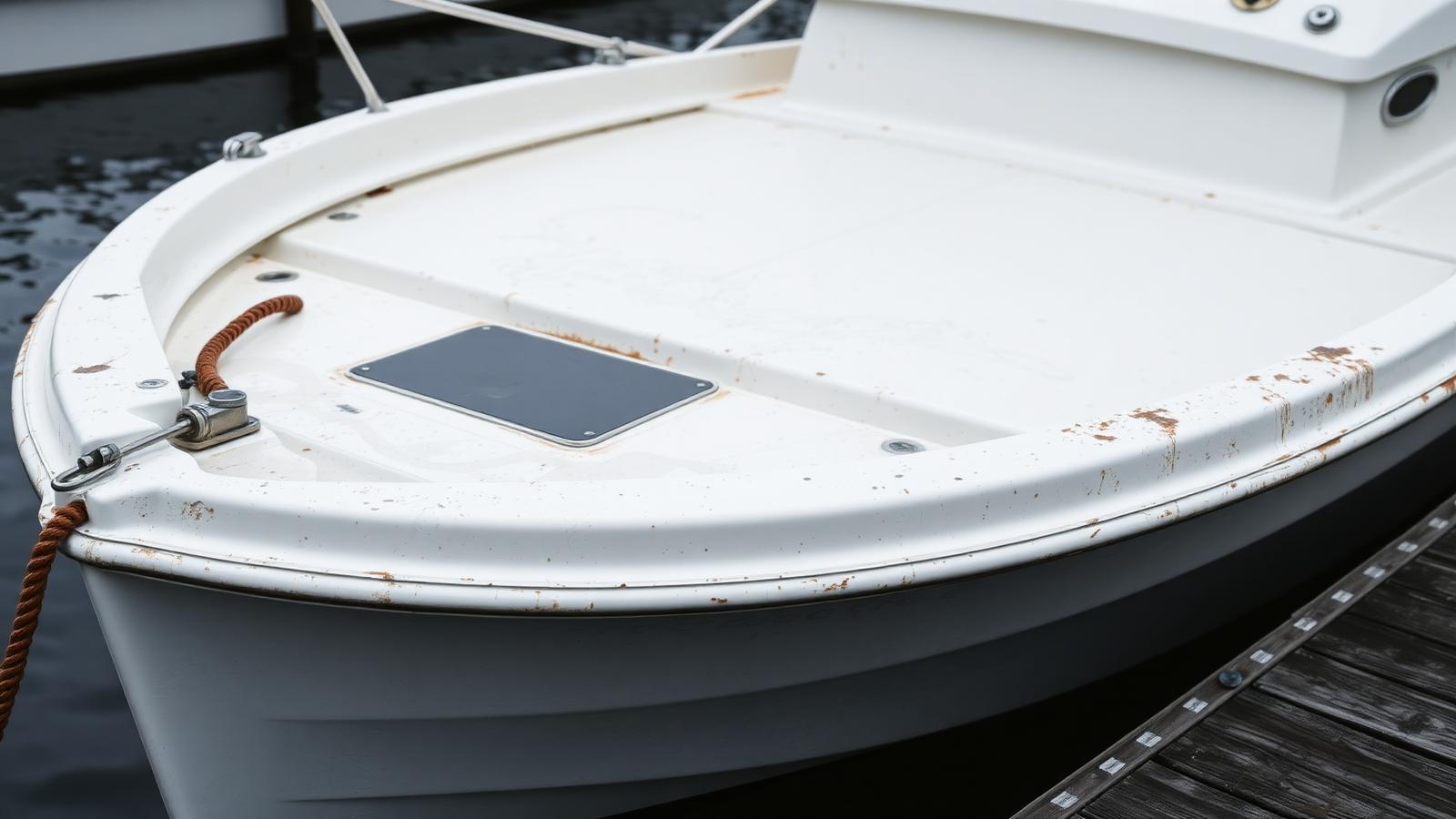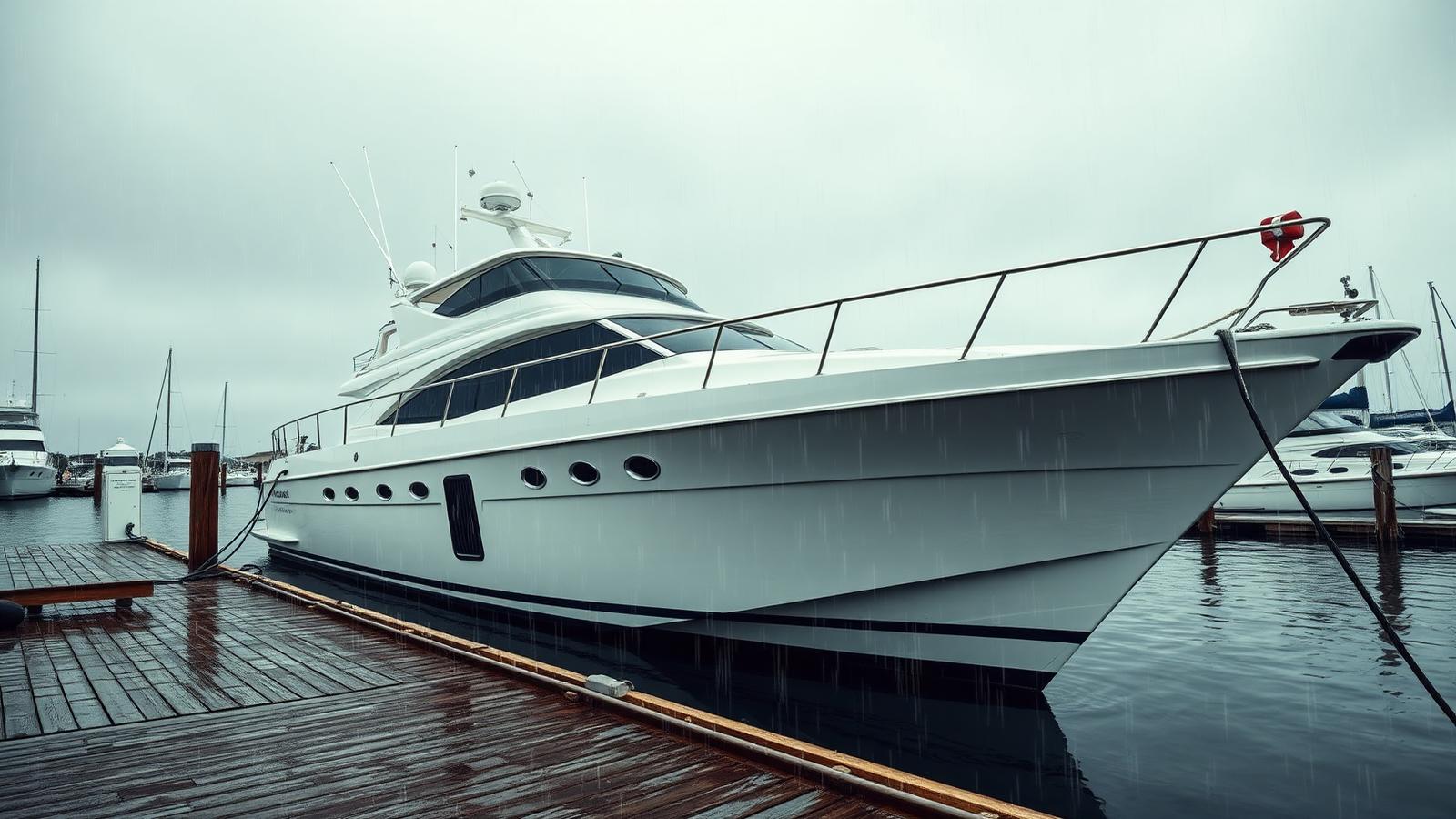
Southern California gets its rain in short, concentrated windows. Between storms, boats collect months of road dust, marina traffic, exhaust film, and salt haze. When the rain finally arrives, it does not wash any of that away — it wets it and drags it down the topsides.
That is why a boat in Marina del Rey or Channel Islands Harbor often looks noticeably worse the morning after a storm than it did the week before.
In this guide
- Why rain makes a boat dirtier, not cleaner
- What to check in the first 48 hours
- The post-rain wash sequence that actually works
- Water spots, streaks, and bird mess
- An owner checklist you can run at the slip
- Common mistakes and when to bring in a professional
Why rain makes a boat look worse
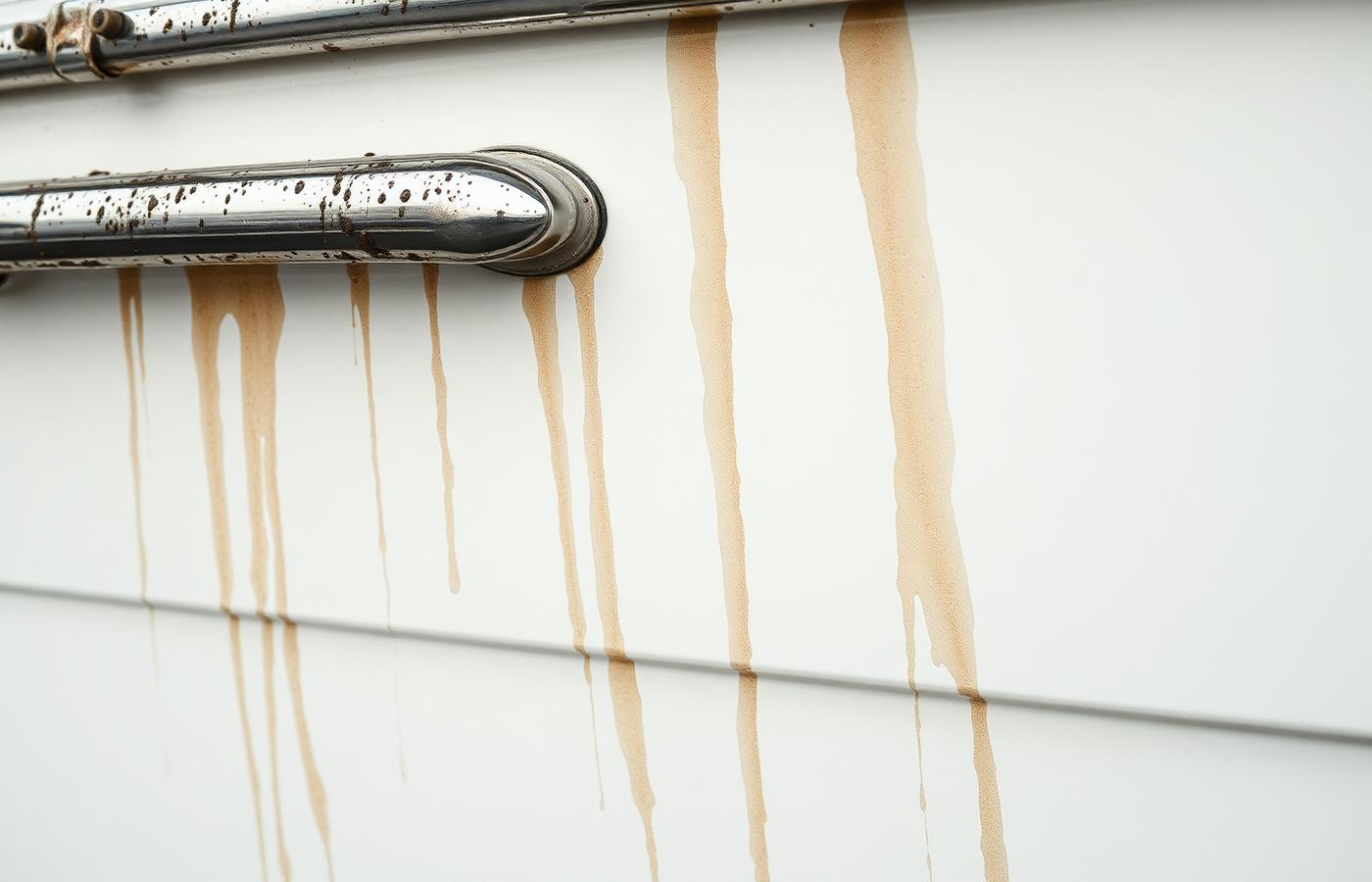
Rainwater is not clean by the time it reaches your gelcoat. It picks up particulate on the way down, then lands on a surface already carrying dust and film. As it runs off, it concentrates that mixture into narrow channels.
Every stainless base, canvas seam, rail stanchion, and hardtop edge becomes a collection point. Water pools there, picks up metal residue and trapped dirt, and releases it in a single track down the hull side.
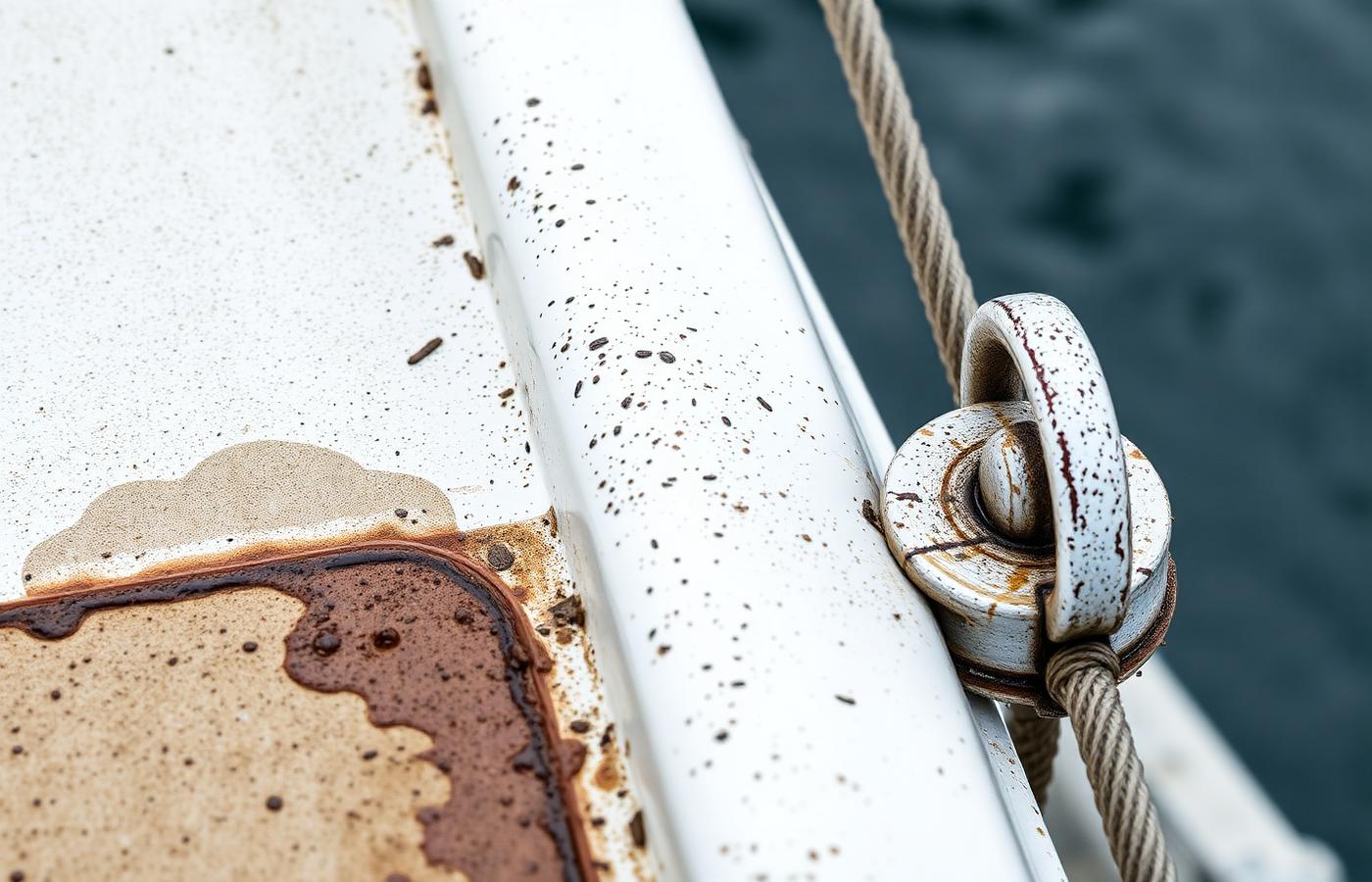
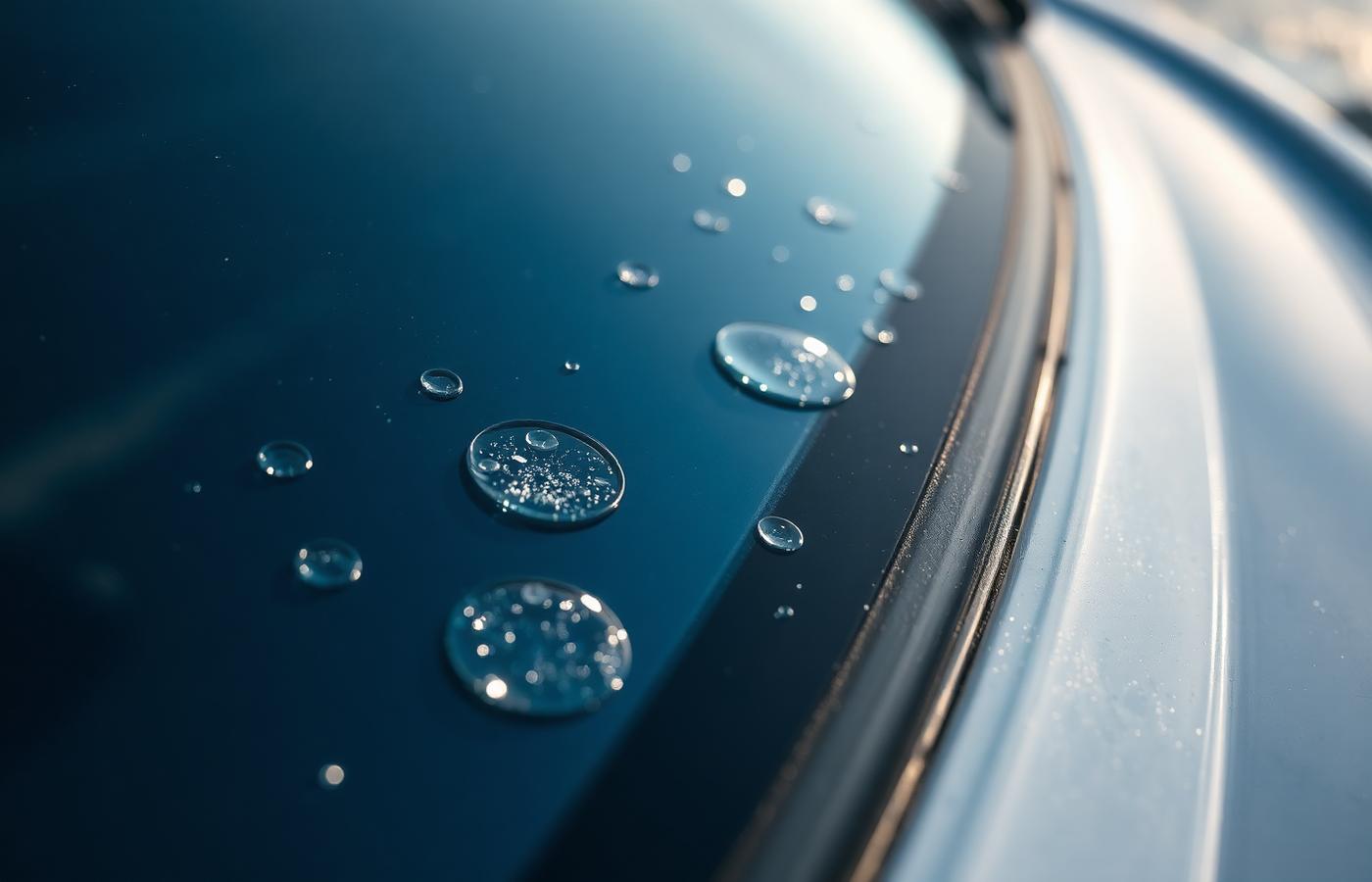
The second problem is what stays behind. Rainwater carries dissolved minerals and airborne contaminants. When it evaporates in the sun that follows a storm, the water leaves and the minerals do not.
The first 48 hours
You do not need to do everything immediately, but a short pass in the first two days prevents most of the work later.
- Check that scuppers and cockpit drains are clear — leaves and debris block them fastest in winter.
- Look for standing water in the cockpit, on canvas, and in tender or seat wells.
- Open and air the cabin if it has been shut for days; trapped moisture is what starts mildew.
- Rinse bird mess off with fresh water rather than leaving it to bake.
- Note any streaking so you know what needs attention at the next wash.
The post-rain wash sequence
The order matters more than the products. Everything on the boat after a storm is abrasive until it has been floated off.
1. Flood rinse before touching anything
Start with a generous freshwater rinse from the highest point down. The goal is to lift grit off the surface so nothing gets dragged across it later. Give the rinse time — a fast pass leaves the film in place.
2. Wash top-down, in sections
Use a marine-safe soap and a clean mitt, working in manageable sections so nothing dries mid-wash. Rinse the mitt often. Grit picked up from non-skid is the most common cause of fine scratching on hull sides.
3. Treat the streak sources, not just the streaks
Clean the hardware, rail bases, and canvas edges the runoff came from. Wash only the streak and it returns with the next rain.
4. Dry the surfaces that spot
Glass, dark gelcoat, and stainless are where spotting shows. Dry those with clean towels rather than letting the sun do it.
Water spots and mineral deposits
| What you see | Likely cause | What usually resolves it |
|---|---|---|
| Light spotting that wipes off wet | Fresh mineral residue | Wash and dry |
| Rings that stay after washing | Bonded mineral deposit | Dedicated deposit removal |
| Spots visible only in direct sun | Early surface etching | Machine polishing |
| Dull, chalky feel across panels | Oxidation, not spotting | Restoration workflow |
Related service
Complete Wash
A full exterior and interior reset after a wet stretch.
Explore this serviceOwner checklist after a storm
Common mistakes
- Wiping a dry, dusty boat with a towel and grinding grit into gelcoat.
- Washing in full midday sun so soap and water dry before rinsing.
- Using household cleaners on canvas, isinglass, or clear vinyl.
- Attacking a stubborn streak with an aggressive pad instead of identifying the source.
- Leaving the cabin shut through a wet week, then wondering where the mildew came from.
- Assuming the rain handled it and skipping the wash entirely.
When to bring in a professional
A single wet weekend is owner work. A season of them is usually not. Consider handing it over when the streaks have stopped responding to washing, when spotting is visible in the gelcoat rather than on it, or when the interior has picked up a musty smell.
It is also simply a logistics question. If the boat lives in Oxnard and you do not, a scheduled wash after the rain window beats a rushed Saturday.
Related service
Restoration & Protection
For spotting and dullness that has moved into the gelcoat.
Explore this serviceRelated location
Boat detailing in Marina del Rey
Slip-side service context for Marina del Rey.
See the local guideGetting it handled
If you would rather not spend the first clear morning after a storm on the dock, send photos of the boat and we will write a condition-based estimate before anything gets scheduled.
Common questions
Does rain clean a boat?
No. Rain wets the dust and airborne film already sitting on the boat and carries it downward, which is why hull sides look worse after a storm than before it. The contamination is redistributed, not removed.
How soon after rain should I wash the boat?
Within a few days is ideal, and sooner if the boat sits under trees, near a bird roost, or beside construction. Streaks and mineral spotting get harder to remove the longer they bake in the sun.
Why does my boat have brown streaks after rain?
Those trails usually start at stainless hardware, canvas edges, non-skid, and rail bases where dirt and metal residue collect. Runoff pulls that concentrated grime down the gelcoat and leaves a visible track.
Can I just wipe the water spots off?
Wipe them while still wet and you usually can. Once they dry, the residue is mineral, not water, and dry wiping drags that grit across the surface. Rinse and wash instead.
What if the spots will not come off at all?
Mineral deposits that have etched into gelcoat or glass no longer respond to washing. That is a correction job — machine polishing on gelcoat, dedicated glass work on windshields — which sits inside the restoration workflow rather than a wash.
Where this fits in our work
Related services
Related locations
Last updated